Greece — +30 698 557 8998
 Turkey — +90 506 022 30 00
 UAE — +971 52 913 5599
 Egypt — +20 110 114 9411


A Market at a Strategic Crossroads
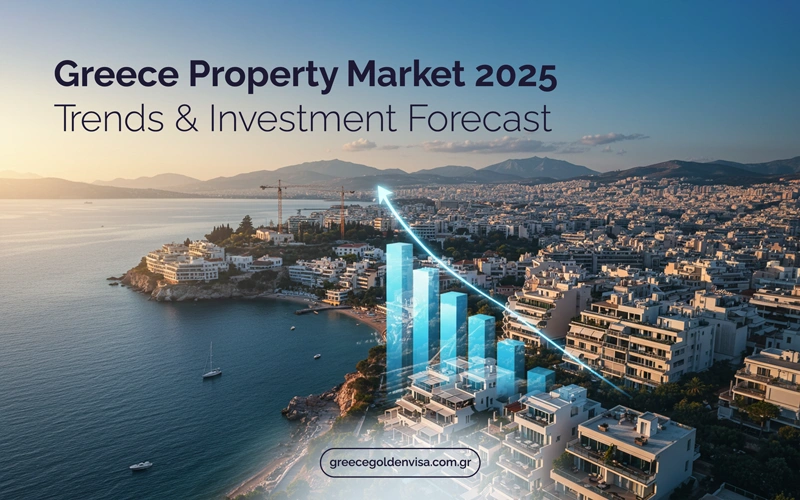
The Greek real estate market in 2026 is a study in dynamic contrasts. On one hand, it’s a market fueled by the Hellenic Republic’s economic resilience, posting steady price gains and attracting significant foreign direct investment (FDI). On the other, it’s a mature landscape, adapting to the fully implemented tiered Golden Visa regulations and shifting toward sustainable, high-specification developments.
For the serious investor, this isn’t a time for uncertainty; it’s a time for clarity. Understanding the nuanced forces at play—from the performance of Athens’ prime suburbs to the impact of the new €800,000 investment tier—is the key to unlocking value and mitigating risk.
Understanding the nuanced forces at play—from the Athens Riviera’s surge driven by the Ellinikon project to the impact of the €800,000 prime zone threshold—is the key to unlocking value in 2026. This guide provides a data-driven, strategic analysis of the Greek property market for the modern investor.
This guide provides a data-driven, strategic analysis of the Greek property market as it stands today. We will move beyond the headlines to dissect regional performance, evaluate the impact of the Golden Visa changes, and offer a clear forecast to help you navigate one of Europe’s most compelling investment landscapes.
You May Also Like: Investor’s Guide to Greek Property Market – 2026
Part 1: The Macro View – Key Market Dynamics in 2026
The Greek market is defined by several powerful, overarching trends that every investor must understand.
- Sustained Price Appreciation:
- The upward trend continues, but the pace is moderating. According to the Bank of Greece, residential property prices saw an annual increase of 8.6% in 2024, with Q1 2026 showing a robust 6.19% year-on-year growth. This indicates a healthy, maturing market rather than a speculative bubble.
- A Widening Price Gap & Slower Transactions:
- While demand remains strong, a notable trend in 2026 is the growing gap between seller asking prices and what buyers are willing to pay, estimated at around 20% for sales. This has led to a slowdown in the number of transactions, not because of a lack of interest, but because the market is finding its new equilibrium at these higher price points.
- The Dominance of Foreign Capital:
- Foreign investment remains a primary engine of the market. In key areas like Athens, international buyers account for as much as 40% of all transactions. The Golden Visa program, even with its new rules, continues to be a significant driver of this trend.
- Critical Supply Shortage:
- There is a significant lack of high-quality, renovated, or newly built properties available. This tight inventory, especially in desirable urban and coastal areas, has created a strong seller’s market, putting upward pressure on prices for the most attractive assets.
In 2026, the structural shortage of 180,000 homes for rent or sale remains the primary driver of price resilience. This supply-demand imbalance, exacerbated by the conversion of over 150,000 units into short-term rentals, has created a firm floor for property values in major urban centers.
Part 2: Regional Deep Dive – A Tale of Three Markets
Greece is not a single, monolithic market. Performance varies dramatically between the capital, the second city, and the world-famous islands.
Athens: The Resilient Economic Engine
The capital remains the heart of the investment market, offering a diverse range of opportunities.
- Price Points: As of Q1 2026, average prices in Central Athens hover around €2,317/sqm. However, the real story is in the prime suburbs. The affluent Southern Suburbs (the “Athens Riviera”), driven by the €8 billion Ellinikon regeneration project, command prices of €4,000/sqm and higher.
- Growth Hotspots: While prime areas are strong, some of the highest percentage growth has been seen in more accessible central districts like Perama and Ano Patisia, which have recorded price surges of over 20% as investors seek value.
- Rental Market: Athens boasts a strong rental market with yields in central areas reaching 6-9% gross, making it highly attractive for income-focused investors.
Beyond the Riviera, the Athens Metro Line 4 expansion is redrawing the investment map. Neighborhoods like Kypseli, Exarchia, and Galatsi are seeing price premiums of 10-15% as smart capital moves in ahead of the new station openings.
Thessaloniki: The Rising Star of the North
The 2026 narrative is dominated by the now-operational Thessaloniki Metro. The Kalamaria extension, which opened in early 2026, has significantly boosted demand in Aretsou and Nea Krini, with rental yields in these metro-connected zones reaching a robust 5-7%
Greece’s second city is no longer in Athens’ shadow and, in some metrics, is outperforming it.
- Price Growth: Thessaloniki has seen staggering price growth, with some data showing a 12.5% year-on-year increase in the city municipality.
- Value Proposition: Despite this growth, it remains more affordable than Athens, with average prices around €2,558/sqm in the city center. This offers a compelling entry point for investors.
- Key Areas: The historic charm of Ano Poli and the scenic waterfront of Kalamaria are attracting significant interest from both domestic and international buyers.
The Greek Islands: The Global Luxury Asset Class
The islands represent a distinct, high-end market driven by global tourism and wealth.
- The Blue-Chips: Mykonos and Santorini are in a league of their own. Average prices in Mykonos exceed €6,750/sqm, with annual appreciation in prime spots hitting 15-25%. These are global trophy assets.
- The Standout Performer: The island of Paros has seen an incredible 108% price increase since 2018, demonstrating the potential for explosive growth in emerging luxury destinations.
- The Diversified Giant: Crete offers the most diverse market, from the luxury enclave of Elounda to the bustling city of Chania. Its size and varied economy make it a more stable, long-term investment play.
Part 3: The Golden Visa Effect – How the New Rules Are Shaping the Market
The 2026 changes to the Golden Visa program have created distinct sub-markets:
- The €800,000 Tier: This has concentrated high-value demand in prime Athens, Thessaloniki, Mykonos, and Santorini. It reinforces the “trophy asset” status of these areas and solidifies their price floor.
Crucially, under 2026 rules, properties in the €400,000 andf €800,000 tiers must be a single dwelling of at least 120 sqm. Aggregating smaller units is no longer permitted, focusing demand on spacious, family-sized luxury residences.
- The €400,000 Tier: This has effectively opened up the rest of Greece to a new wave of investors, driving interest in secondary cities and less-developed coastal areas with high potential.
- The €250,000 Tier: This has created a popular niche for savvy investors focused on “value-add” projects, acquiring older properties in good locations with the intent to renovate and capitalize on the rising market.
Read Also: Greek Property Renovation Tips for 2026 Investors
Part 4: Market Forecast – A Look Towards 2026
While the double-digit growth of the past few years is expected to cool, the outlook remains positive.
- Moderation, Not Correction: Leading forecasts, including those from the European Banking Authority, project a healthy but more moderate price growth of 3-5% annually through 2026-2027. This signals a shift from a recovery boom to stable, sustainable growth.
- Enduring Drivers: The market will continue to be supported by strong tourism, ongoing infrastructure development (especially in Athens), and a persistent housing supply shortage.
- Continued Foreign Interest: Greece’s value proposition compared to other EU countries, combined with its lifestyle and residency benefits, will ensure that foreign capital continues to be a major force in the market.
For 2026 and 2027, the European Banking Authority projects a stable annual growth of 3-4%. This ‘soft landing’ protects investors from a bubble while allowing for steady capital appreciation through foreign direct investment (FDI).
A Time for Strategic Action
The Greek real estate market in 2026 is more complex than ever, but it is also rich with opportunity. The era of easy, across-the-board gains is giving way to a period where strategic insight, regional knowledge, and a clear understanding of the new regulatory landscape are paramount. For the serious investor who does their homework, Greece remains one of the most compelling real estate stories in Europe, offering a unique blend of capital appreciation, rental income, and lifestyle benefits.
Frequently Asked Questions (FAQ)
Are property prices falling in Greece?
No. Greece property prices continue to rise, though the pace has moderated to a stable 3-6% annually in 2026. A structural shortage of 180,000 homes and high demand for the Golden Visa provide a strong price floor, preventing a market correction.
Is it a good time to buy property in Greece?
Yes. 2026 is an ideal time for long-term investors seeking stability over speculation. With the Thessaloniki Metro operational and the Ellinikon Project reaching key milestones, infrastructure-led appreciation offers excellent capital growth opportunities.
Is Greek property a good investment?
Yes. Greek real estate remains a top-tier EU investment. Beyond capital gains, central Athens and popular islands offer net rental yields of 4-7%, significantly outperforming many other European capitals.
Is Greece still struggling financially?
No. Greece has achieved Investment Grade status and consistently outpaces the EU average in GDP growth. The economy is now characterized by fiscal stability, rising foreign direct investment (FDI), and a booming tourism sector.
Is it easy to sell property in Greece?
Yes, for high-quality assets. While the market for older, unrenovated apartments is slower, there is a “buying frenzy” for Golden Visa compliant properties and modern, energy-efficient homes, which sell rapidly to international investors.
What is the 5-year law in Greece?
The “5-year law” typically refers to the Golden Visa residency cycle. Investors must hold their property for 5 years to renew their residence permit. If the property is sold before this period, the residency permit is revoked unless replaced by another qualifying investment.
Where is the cheapest place in Greece to buy property?
The most affordable regions are found in the central mainland (Thessaly) and parts of the northern Peloponnese. In these areas, you can still find traditional homes well below the €250,000 threshold, though these typically do not qualify for residency benefits.
How has the €800,000 threshold affected Athens?
The €800,000 tier has turned Central Athens and the Southern Suburbs into an exclusive luxury market. It has stabilized prices for high-end villas and large apartments (minimum 120 sqm) while shifting mid-tier investors toward the €400,000 regional zones.